
Table of Contents
- What Luxury Home Automation Design Services Actually Include
- Smart Home Integration Cost: What Drives the Number
- Choosing the Best Home Automation Systems for Luxury Homes
- Professional Network Optimization: The Layer Everything Depends On
- Cybersecurity and Data Privacy in a Connected Home
- ROI and Property Value: What Automation Adds at Resale
- Lifecycle Management: Support After the Installers Leave
- Frequently Asked Questions
Last Updated: September 23, 2026
What Luxury Home Automation Design Services Actually Include
Luxury home automation design services are the professional planning, engineering, and installation of integrated lighting, audio, video, security, and climate systems, documented before a single device is mounted. At 21st Century Audio Video, we’ve spent nearly two decades building these systems across North Texas, and the difference between a home that works and one that fights its owners comes down to what happened before installation day.
A properly scoped luxury home automation project covers three layers: infrastructure (wiring, network, racks), control (how everything talks to everything else), and interface (how you use it).
Design Phase: Documentation Before Devices
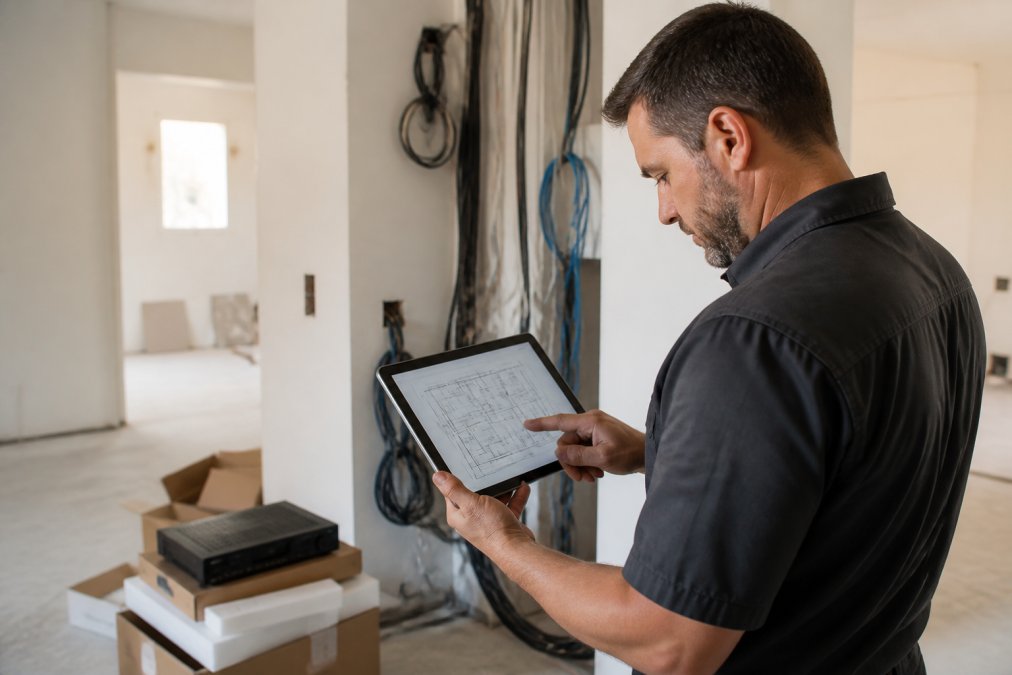
Documentation separates a real integrator from a box-seller. Before any equipment is ordered, a design phase should produce room-by-room plans showing device locations, cable runs, power requirements, and control points.
Here’s what a proper design package includes:
- Reflected ceiling plans marking speaker and lighting positions
- A network topology diagram showing every connected device
- A control interface mockup for each room
- A cable schedule with labeled runs
Installation and Programming Standards
Ask any integrator to show you a photo of a completed equipment rack before you sign. A messy rack is a reliable predictor of a messy system, because the same person who didn’t bother to label cables probably didn’t bother to document the programming either.
Smart Home Integration Cost: What Drives the Number
Smart home integration cost is driven by four variables: the number of controlled subsystems, the amount of new wiring required, the complexity of the programming, and whether the home is in construction or already finished. Any provider quoting a standard price before walking your property is guessing.
The Four Cost Drivers, Broken Down
1. Subsystem count. Each subsystem, lighting, shades, audio zones, video distribution, security, cameras, climate, access control, pool and spa, carries its own hardware, programming logic, and point of failure. A home with four subsystems is a fundamentally different project than one with twelve, even at identical square footage.
What a Real Line-Item Scope Looks Like
When you compare quotes, insist on four separate line items. When scopes match, prices tend to converge.
- Infrastructure, structured wiring, rack, managed switches, router, patch panels, power conditioning, and the labor to install them
- Hardware, keypads, dimmers, touch panels, speakers, amplifiers, cameras, controllers, and their manufacturer warranties
- Programming and commissioning, scene design, user interface setup, integration testing, and calibration of audio and video
- Support, the ongoing relationship, whether billed monthly, annually, or by incident
Why Quotes for the Same Scope Vary So Widely
Two quotes for the same house can differ by thousands of dollars, and the gap usually comes down to what’s included, not what’s charged.
Common reasons quotes diverge:
- One quote includes network infrastructure, the other assumes your existing router is fine
- One includes programming and calibration, the other bills it separately later
- One specifies commercial-grade hardware, the other uses consumer gear
- One includes a support plan, the other disappears after the final invoice
- One prices a single controller, the other prices a redundant controller for failover
- One includes a documented as-built package, the other hands over nothing
The cheapest quote is often the one that omits the network layer. If a provider doesn’t mention network infrastructure, assume it’s not included, and expect to pay for it later once your devices start dropping offline.
The Cost Question Nobody Asks
The question worth asking isn’t “what does it cost to install”, it’s “what does it cost to own for ten years.” Consumer-grade hardware may save money on day one and cost more in year three, when a failed controller is discontinued and the replacement requires reprogramming the entire home. A platform with a documented upgrade path costs more upfront and less over time.
Choosing the Best Home Automation Systems for Luxury Homes
The best home automation systems for luxury homes are built on open, well-documented platforms with local dealer support, not the longest feature list. Reliability and serviceability matter more than novelty in a home you’ll live in for a decade.
| Criteria | What to Look For | Why It Matters |
|---|---|---|
| Longevity | Manufacturer track record over 10+ years | Protects your investment |
| Local support | Trained dealers in your region | Faster repairs, no shipping |
| Integration depth | Works with major lighting, AV, security brands | Fewer conflicts |
| Update cadence | Regular firmware and app updates | Security and stability |
The Three Platform Tiers You’ll Actually Encounter
Most luxury projects land in one of three tiers, and the tier matters more than the brand name on the box.
Wired Versus Wireless: The Decision That Outlasts Every Brand Choice
Protocol choice outlasts brand choice. A home wired for a robust backbone can swap controllers in a weekend; one built entirely on wireless can be stranded when a protocol falls out of favor.
- Wired (Ethernet, RS-485, and dedicated control buses), the most reliable, the most secure, and the most expensive to install. Best for anything stationary: cameras, access points, controllers, touch panels, and audio distribution.
- Wireless mesh (Thread, Zigbee, Z-Wave), good for sensors, locks, and lighting where running cable is impractical. Reliability depends heavily on the density and placement of nodes.
- Wi-Fi, convenient, but the worst choice for always-on devices. Every Wi-Fi device competes for airtime, and a home with dozens of them will see dropouts.
- Proprietary RF, common in legacy lighting and shade systems. Reliable within its ecosystem, but a dead end if the manufacturer exits the category.
The Questions That Separate a Real Evaluation From a Sales Pitch
Before you commit to a platform, ask the integrator:
- What happens to my system if the manufacturer is acquired or exits the residential market?
- Can I see the programming logic, or is it locked to your dealer account?
- Which of my devices will still receive security updates five years from now?
- If I want to add a subsystem in three years, does the platform support it, or do I need a new controller?
- What is the documented upgrade path from the current hardware generation to the next?
The answers tell you whether you’re buying a system or renting access to one, a difference measured in years, not dollars.
Professional Network Optimization: The Layer Everything Depends On
Professional network optimization is designing a dedicated, segmented network that gives every smart device a stable, secure connection. It’s the single most overlooked part of a luxury automation project.
What proper network design includes:
- A business-grade router and managed switches
- Separate VLANs for automation, cameras, and guest devices
- Hardwired connections for anything stationary
- Redundant internet paths where the budget allows
Cybersecurity and Data Privacy in a Connected Home
Cybersecurity in a connected home means controlling who can access your devices, cameras, and data. It’s the angle most integrators skip, and the one that matters most as homes add more internet-connected hardware.
Practical protections we build into every project:
- Isolating automation devices from the network your personal computers use
- Changing default passwords on every device before it goes live
- Disabling remote access features you don’t actually use
- Keeping firmware current across the whole system
ROI and Property Value: What Automation Adds at Resale
Home automation rarely returns its full cost at resale, and any provider claiming otherwise is overselling. What it does is make a home easier to sell to a growing pool of buyers who expect modern infrastructure.
Lifecycle Management: Support After the Installers Leave
Lifecycle management is the ongoing maintenance, monitoring, and updating of your system after installation. It determines whether your investment holds up in year five or quietly degrades in year two.
What ongoing support should include:
- Remote diagnostics for issues that don’t require a site visit
- Scheduled firmware and security updates
- A clear process for adding devices later
- Response times defined in writing
The system you buy is only half the purchase. The support relationship behind it is the other half, and it’s the half that determines whether the technology still works the way it did on day one.
Frequently Asked Questions
What is included in luxury home automation design services?
A full engagement covers system design and documentation before any equipment is ordered, lighting and automated shade control, climate zones, distributed audio and home theater, security and surveillance integration, network infrastructure, and a unified control interface. It also includes programming, calibration, homeowner training, and a support plan. The design phase is what separates a luxury home automation project from a stack of retail devices, because every subsystem is planned to work with the others rather than added one at a time.
How much does professional smart home design cost?
Smart home integration cost depends on square footage, the number of lighting loads and zones, whether walls are open during construction, and how many subsystems you integrate. Two quotes for a similar-sounding scope can differ by tens of thousands of dollars because one includes network infrastructure, programming, and support while the other covers hardware only. Ask each provider to itemize design, wiring, equipment, programming, and post-installation support separately, then compare line by line instead of totals.
Why hire a professional instead of buying devices and setting them up myself?
DIY works for a few standalone devices. It breaks down when lighting, climate, audio, shades, and security need to respond to each other reliably. The best home automation systems for luxury homes depend on clean wiring, a network built for the device count, and programming that ties brands together. Professionals also document the system, so a future technician, electrician, or buyer can understand what is behind the walls. That documentation is difficult to recreate after the drywall goes up.
Does home automation increase the resale value of a luxury property?
It can, but the effect comes from how the system is built rather than how many devices it has. Buyers in the luxury segment respond to systems that are documented, serviceable, and easy to operate, and they discount homes full of abandoned gear from defunct brands. Professional network optimization, labeled wiring, and a transferable support relationship all read as maintained infrastructure. Treat automation as a feature that supports your asking price rather than a guaranteed return, and keep records of every component and configuration.