
Table of Contents
- What Makes a High-End Smart Home Theater System
- Core Components of Premium Home Theater
- Custom Home Theater Design Fundamentals
- Home Theater Acoustic Treatment and Room Correction
- Smart Home Automation Integration with Theater Systems
- Budgeting and Long-Term System Reliability
- Building Your High-End Smart Home Theater System
- Frequently Asked Questions
Last Updated: September 25, 2026
What Makes a High-End Smart Home Theater System
Smart home theater systems combine immersive audio, stunning visuals, and seamless automation into a unified entertainment experience. Unlike standard home entertainment setups, these systems integrate multiple components, from precision loudspeakers and powerful amplification to room-corrected acoustics and smart home connectivity. At 21st Century Audio Video, we’ve spent almost two decades designing systems that deliver both technical excellence and intuitive usability, ensuring every element works together flawlessly.
The difference between a mediocre system and a truly exceptional one comes down to integration. Most people buy individual components and hope they work together. That rarely happens. A proper high-end smart home theater system requires meticulous planning from the start: selecting components that complement each other, treating the room acoustically, calibrating everything to your specific space, and automating the entire experience so it feels effortless to use.
Core Components of Premium Home Theater
Building a high-end smart home theater system requires understanding five critical components: the AV receiver, loudspeakers, subwoofers, display technology, and room acoustics. Each plays a specific role, and all must work in harmony.
AV Receivers and Amplification
The AV receiver serves as the brain of your system. It processes audio signals, routes video to your display, amplifies sound to your speakers, and often handles smart home integration. A quality receiver supports the latest audio formats, Dolby Atmos, DTS:X, lossless audio, and delivers sufficient power to drive your loudspeakers cleanly across the entire frequency range.
When selecting an amplifier, look for models that can handle your speaker impedance without distortion, even during demanding action sequences. Underpowered amplification is a common mistake: it forces the receiver to work harder, introducing distortion and limiting dynamic range. Your soundstage suffers, and the immersive effect disappears.
The receiver also manages calibration, adjusting speaker levels, distances, and crossover frequencies to match your room and seating position. Modern receivers include room correction technology that analyzes your space and optimizes frequency response automatically. This step is non-negotiable for achieving high-fidelity reproduction.
Loudspeakers and Surround Sound Configuration
Loudspeakers are where the magic happens. Premium systems typically use a 5.1, 7.1, or Atmos configuration. A 5.1 setup includes left, center, and right front speakers, plus surround speakers and a subwoofer. A 7.1 configuration adds rear surrounds for deeper immersion. Atmos adds height channels, either in-ceiling speakers or ceiling-bouncing models, creating a three-dimensional soundfield that envelops you.
The center channel is critical. This speaker reproduces most dialogue and on-screen action. A weak center channel ruins the experience: dialogue becomes unclear, and action scenes lack punch. Invest in a quality center speaker that matches your left and right front speakers tonally.
Surround speakers should blend seamlessly with the front stage. Many people position surrounds too loud or too high in frequency, creating an obvious “surround effect” that breaks immersion. Surrounds should enhance the soundstage subtly, extending the width and depth without drawing attention to themselves.
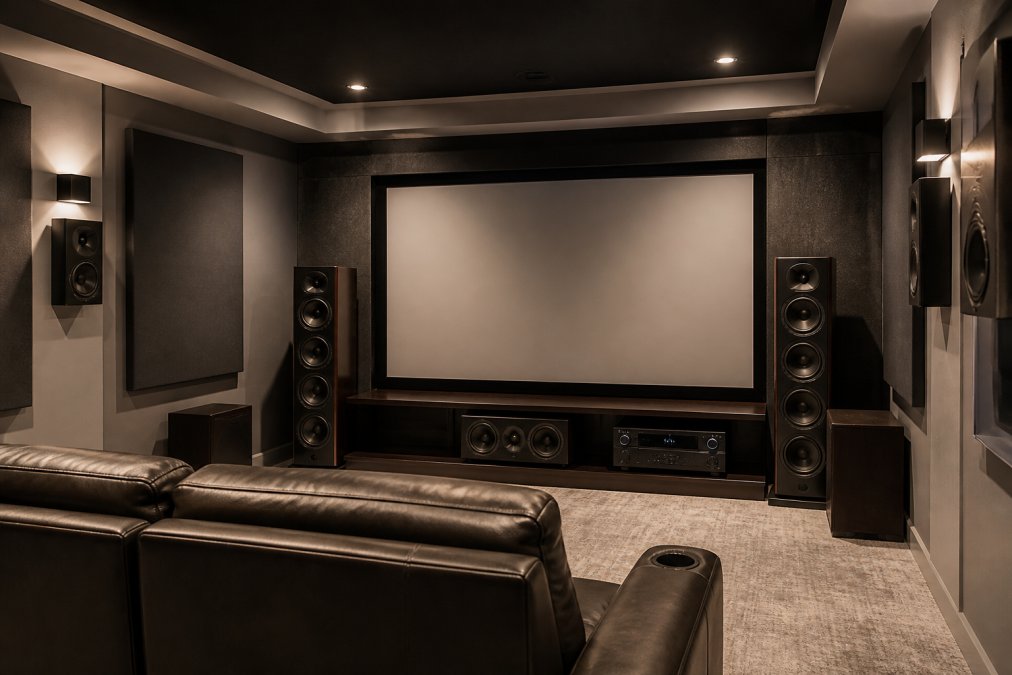
Don’t cheap out on surrounds. They’re not background speakers, they’re part of your soundstage. Use speakers that tonally match your fronts, even if it means spending more upfront.
Subwoofers and Bass Management
Bass is where immersion lives. A quality subwoofer reproduces low frequencies that loudspeakers cannot handle efficiently. The difference between a mediocre subwoofer and a premium one is profound: tight, articulate bass versus boomy, undefined rumble.
Placement matters enormously. Most people put the subwoofer in a corner, thinking it maximizes output. In reality, corner placement often creates peaks and nulls, regions where bass is too loud or too quiet. The best placement depends on your room’s geometry. Many installers use a crawl method: place the subwoofer where you normally sit, play bass-heavy content, and walk around the room to find where bass sounds best. That’s often where the subwoofer should go.
Crossover frequency is another critical setting. This determines where your subwoofer takes over from the main loudspeakers. A typical crossover sits between 80-120 Hz. Set it too low and your mains struggle with low-end detail. Set it too high and the subwoofer becomes obvious, you hear it rather than feel it.
Custom Home Theater Design Fundamentals
Designing a high-end smart home theater system requires planning before installation. Room layout, seating, and display choice all impact the final result.
Room Layout and Seating Configuration
The ideal theater room is rectangular with a 1.5:1 aspect ratio (length to width). This geometry minimizes acoustic problems. However, most rooms don’t have this luxury, so adaptation is necessary.
Seating distance from the screen matters. Closer viewing lets you see more detail; farther viewing reduces the immersive effect. Most residential rooms support a 65-85 inch display comfortably.
Riser height is another consideration. The center of the screen should align roughly with eye level when seated. If your screen is mounted too high or too low, neck strain and viewing fatigue follow. Proper riser design ensures comfortable viewing for extended periods.
Display Technology and Video Standards
Modern displays support 4K UHD resolution and HDR (High Dynamic Range), which expands contrast and color range dramatically. Dolby Vision and HDR10 are the two main HDR standards.
Refresh rate matters for gaming and sports.
Projectors vs. flat panels: projectors deliver larger images and a more cinematic feel, but require light control and regular maintenance. Flat panels are more convenient and forgiving of ambient light. For dedicated theater rooms, projectors excel. For multipurpose spaces, flat panels work better.
Home Theater Acoustic Treatment and Room Correction
Acoustics separate good systems from great ones. Even the best loudspeakers sound mediocre in an untreated room.
Acoustic Panels and Bass Traps
Hard surfaces, drywall, tile, glass, reflect sound, creating echoes and standing waves that color the audio. Acoustic panels absorb these reflections, tightening the soundstage and improving clarity.
The first reflection points are critical. These are the spots on walls where sound bounces directly to the listening position. Treating these areas with absorption panels dramatically improves dialogue clarity and soundstage focus. A common mistake is over-treating: excessive absorption creates a dead, unnatural sound. Balance is essential.
Bass traps address low-frequency problems.
Acoustic treatment isn’t optional for high-end systems. Skipping it wastes your component investment. Untreated rooms mask the capabilities of premium equipment and create listening fatigue.
Calibration and Sound Pressure Level Tuning
After treatment, calibration fine-tunes everything. Most modern AV receivers include automated calibration systems that measure speaker levels, distances, and frequency response. These tools are remarkably effective but aren’t perfect. Professional calibration using a sound pressure level meter and trained technician yields superior results.
Smart Home Automation Integration with Theater Systems
Modern high-end smart home theater systems integrate with broader home automation ecosystems, enabling sophisticated control and multi-room audio.
Ecosystem Interoperability and Multi-Room Audio
A truly seamless experience requires all devices speaking the same language. Smart home automation platforms, like Apple HomeKit, Google Home, or Amazon Alexa ecosystems, provide central control. Your theater system should integrate with whichever platform you’ve chosen, allowing voice commands to dim lights, close blinds, and start playback.
Wireless Streaming and Connectivity Standards
Wireless streaming has matured significantly. Protocols like AirPlay 2, Chromecast, and DLNA (Digital Living Network Alliance) enable reliable, low-latency audio transmission. However, reliability depends on network quality. A strong WiFi infrastructure, ideally 5 GHz band with strong signal throughout your home, is essential.
Budgeting and Long-Term System Reliability
Building a high-end smart home theater system is an investment. Understanding costs and planning for longevity ensures you get lasting value.
Firmware Updates and Future-Proofing
Technology evolves rapidly. A system purchased today should remain relevant for 5-10 years. This requires components with active manufacturer support. Receivers that receive regular firmware updates gain new audio formats, improved room correction, and enhanced smart home compatibility without hardware replacement.
Future-proof your system by choosing manufacturers with proven track records of long-term support and regular firmware updates. This single decision can add years of relevance to your investment.
Professional Installation and Ongoing Support
Professional installation isn’t a luxury, it’s insurance. Proper wiring, calibration, and integration require expertise. A poorly installed system frustrates you daily and underperforms despite premium components.
Building Your High-End Smart Home Theater System
Start with your room. Measure dimensions, identify acoustic challenges, and plan seating. Consult with a professional designer, they’ll identify problems you’d miss and suggest solutions that fit your space and budget.
Frequently Asked Questions
What is the best high-end smart home theater system for a residential space?
The best system depends on your room size, layout, and budget. High-end smart home theater systems typically include a quality AV receiver, multi-channel loudspeakers, a capable subwoofer, acoustic treatment, and smart home integration. Start by assessing your room’s dimensions and acoustics, then select components that match your immersive audio preferences, whether that’s Dolby Atmos, DTS:X, or traditional surround sound. Professional design ensures your investment delivers the performance you expect.
How does smart home automation integration improve a home theater experience?
Smart home automation integration allows you to control lighting, temperature, window treatments, and audio-visual systems from a single interface. When you start a movie, automated controls can dim lights, close blinds, and adjust climate settings without manual intervention. Multi-room audio lets you stream content throughout your home seamlessly. Ecosystem interoperability ensures devices from different manufacturers communicate reliably, reducing the frustration of managing multiple apps and creating a truly intuitive experience.
What role does acoustic treatment play in custom home theater design?
Acoustic treatment controls reflections, absorbs excess bass energy, and reduces room modes that color your sound. Acoustic panels on walls and ceiling reduce flutter echo and standing waves, while bass traps in corners manage low-frequency buildup. Proper treatment prevents sound from bouncing around unpredictably, which means your AV receiver’s calibration tools work more effectively. In non-dedicated spaces, strategic placement of panels and diffusers maintains sound quality without requiring a complete room redesign.
How do I know if a high-end system will remain current as technology changes?
Choose components with strong manufacturer support for firmware updates and backward compatibility. Quality AV receivers and loudspeakers typically receive updates for 5-10 years, ensuring compatibility with new audio codecs and standards. Select systems with modular designs so individual components can be upgraded without replacing everything. Professional installers stay current with technology trends and can advise on upgrade paths. Request a service plan that includes ongoing support and access to technical expertise when standards evolve.